← Selected work

Active wind blade stabilization

A PID-controlled lifting spreader designed to steady a suspended 70-ton turbine blade during offshore installation.

Year
2026
Role
System design, controls and prototype
Tools
Python, MATLAB/Simulink, SolidWorks, ESP32
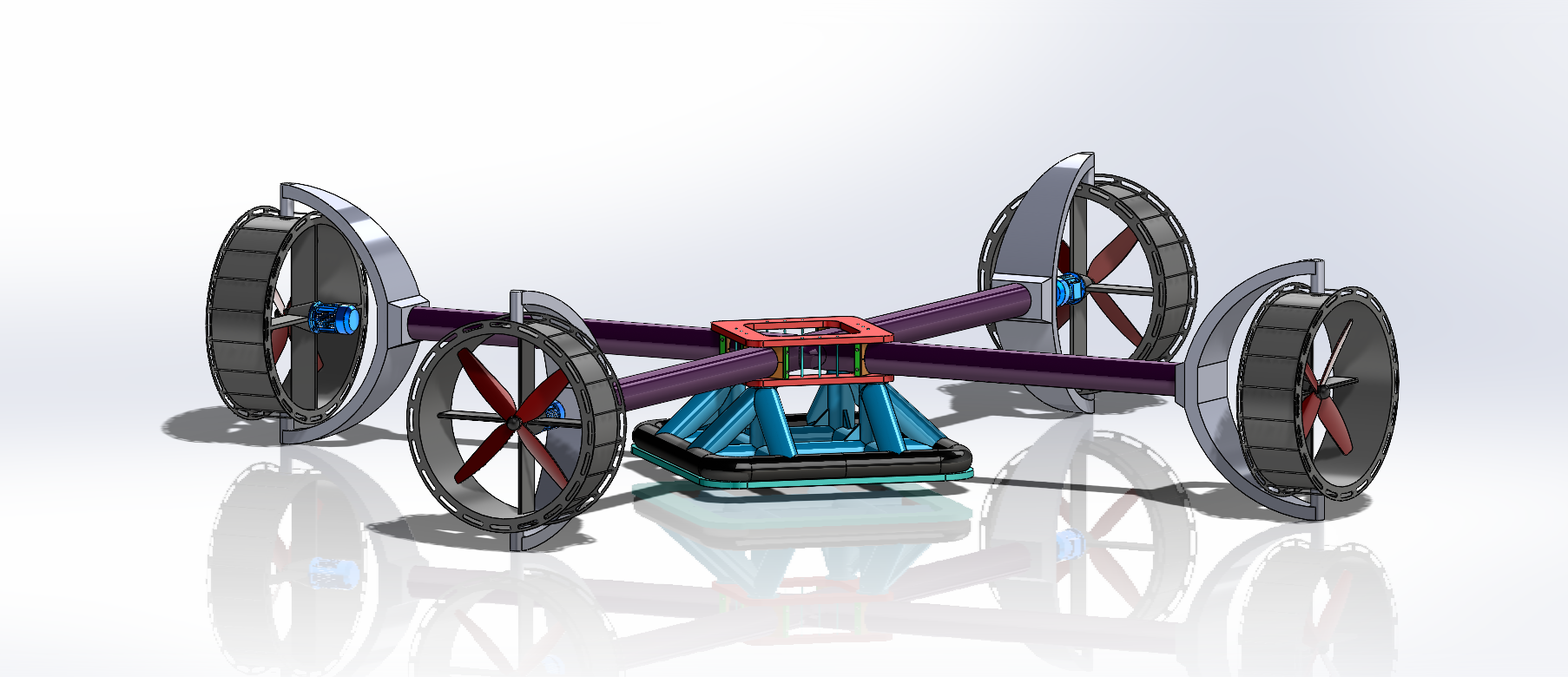
CAD rendering of an offshore wind turbine blade beneath an active lifting spreader
Four vectoring thrusters counter blade motion during the final approach

Challenge

Wind and vessel motion leave a long blade moving beneath the crane just as technicians need to align it with the hub. Our team designed a spreader with four independently vectoring propellers, applying force and moment directly at the lifted blade instead of relying only on tag lines.

4 × 12.5 kNVectoring thrusters
50 s15 m + 20° recovery
1:100Physical prototype scale
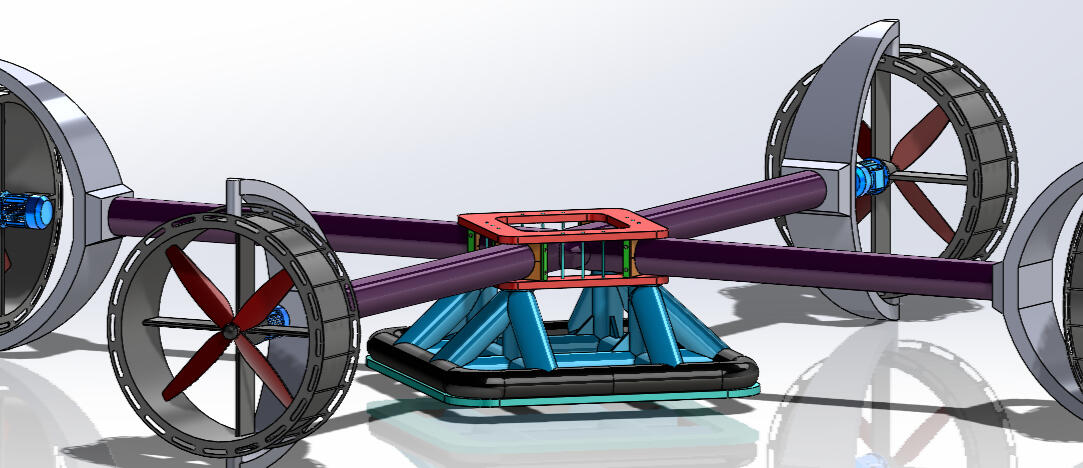
Detailed CAD view of the lifting spreader
Full-scale layout and vectoring-thruster geometry

System and control

Mechanical layout, power demand and control authority were treated as one coupled problem. A dynamic model converted position and rotation error into thruster commands; structural and power checks kept the concept buildable. Estimated demand was 1.9 MW nominal and 2.5 MW at peak. The simulations compare the controller before and after cable sway was added.

Simulation - without cable sway effect
Simulation - with cable sway effect

Prototype

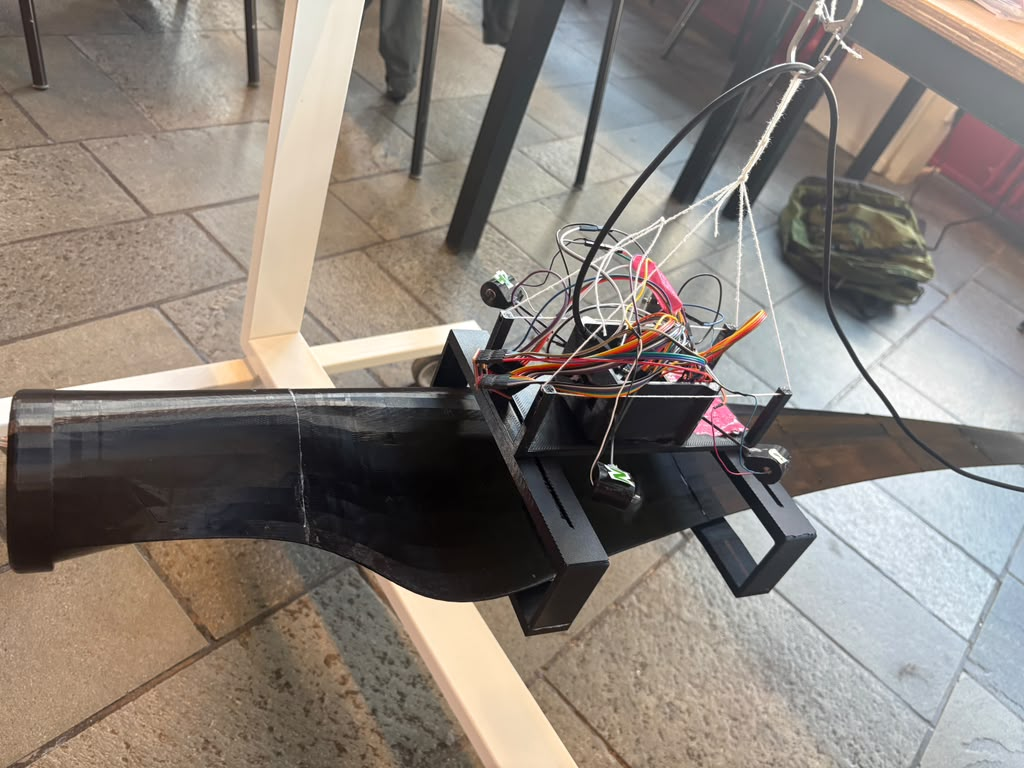
A 1:100 ESP32 prototype with inertial sensing and four propellers tested control direction, sensor noise and command limits. It validated the control logic while showing where position tracking and a more representative suspended mass are needed next.

Physical prototype of the active lifting spreader
1:100 ESP32 and IMU prototype
Real prototype - ESP32 and IMU hardware test
Next projectElectric racing bodywork