← Selected work

EcoTrim human-powered string trimmer

A hand-cranked capstone prototype that reaches string-trimmer speed without fuel, batteries or grid power

Year
2025
Role
Capstone team · mechanical design, prototyping and testing
Tools
CAD, additive manufacturing, chain drive, mechanical testing
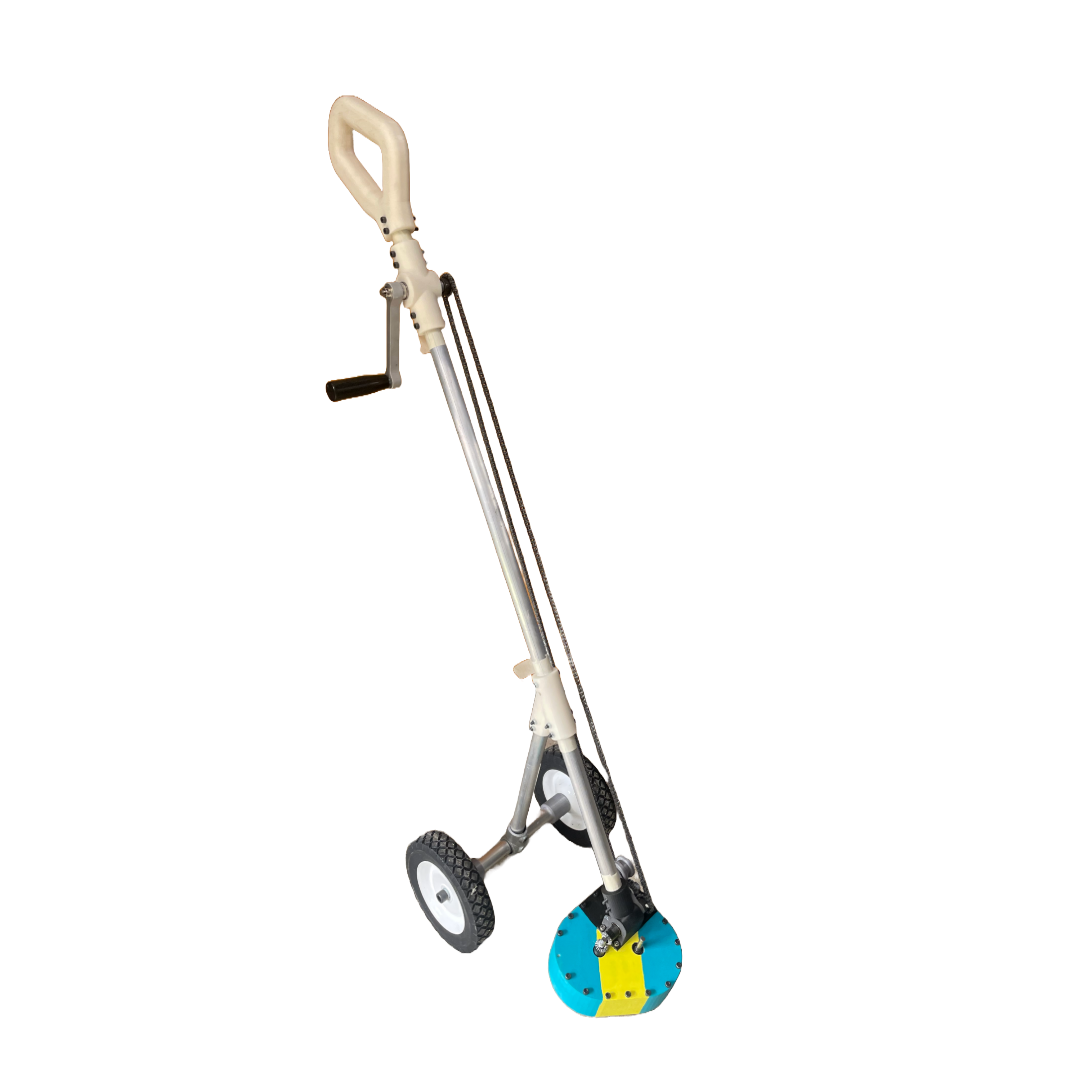
Completed EcoTrim human-powered string trimmer with hand crank, chain drive, two wheels and front cutting head
Final prototype with a hand-cranked drivetrain, two-wheel support and front cutting head

Project context

Working with a six-person Northeastern capstone team, I helped develop a string trimmer powered entirely by its operator. The goal was to retain the reach and cutting action of a conventional trimmer without fuel, batteries, charging or a power cord.

The first prototype used one wheel, an off-the-shelf 80:1 transmission and a side-mounted cutting head. Testing exposed weak cutting performance, difficult torque transfer and poor balance, setting the requirements for a ground-up second iteration.

142:1Total three-stage gear ratio
8,000 RPMOutput with a 60 mm cutting line
11,000 RPMMeasured no-load output
Design selection

The team compared gearbox, cutting-head and power-input concepts, rejecting options that added friction, size, instability or poor traction. The final architecture paired a three-stage spur gearbox with a front head, two wheels and a hand crank.

Selected pathRejected alternative
GearboxPlanetary
Gears
Spur GearsHarder to Backdrive2 stages3 stages4 stagesSizeFrictionErgonomicsFront Cutting
Head
Side Cutting
Head
2 wheels1 wheelStabilityBalancePower InputCrankPushTractionEcoTrim

System architecture

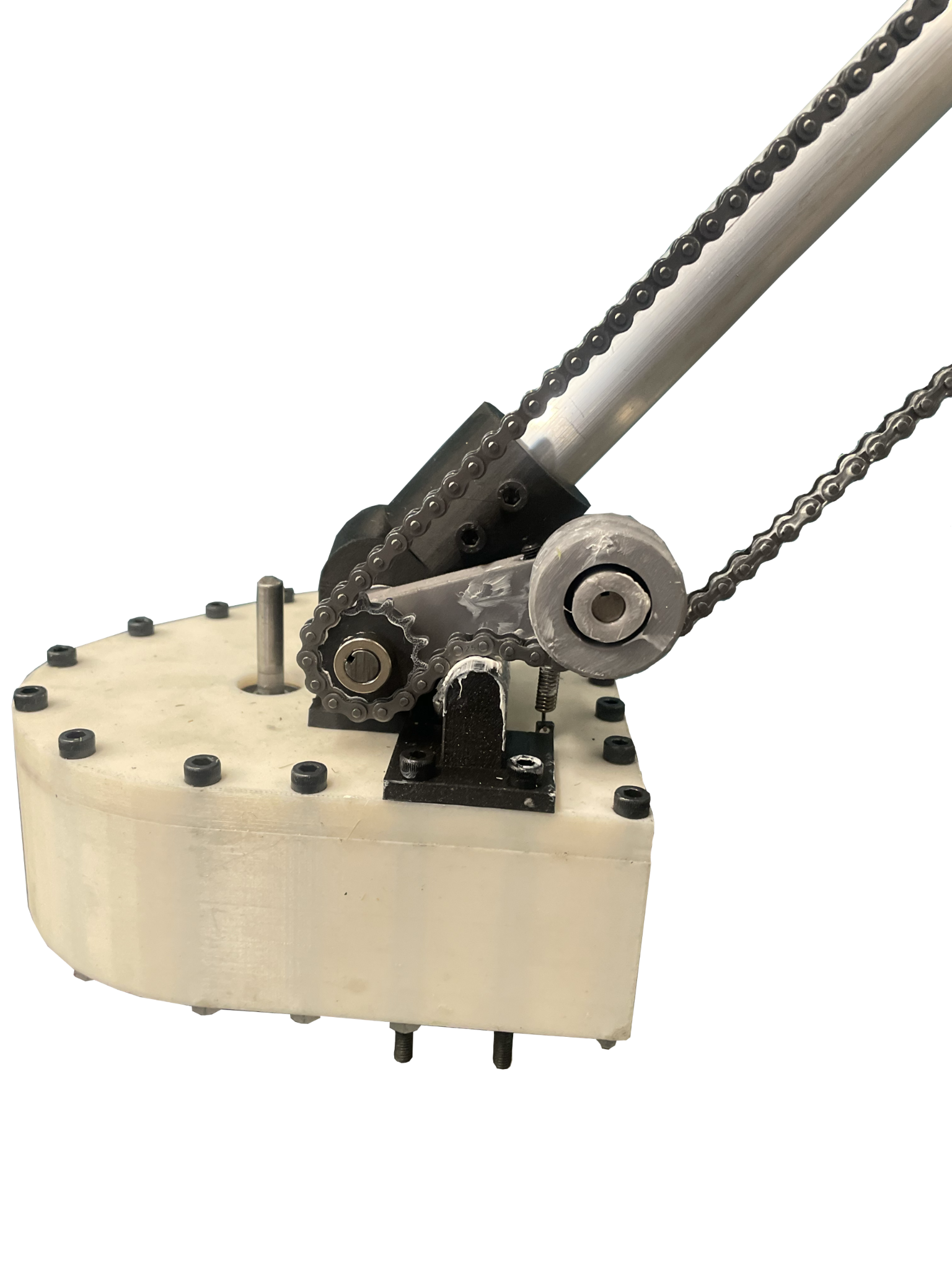
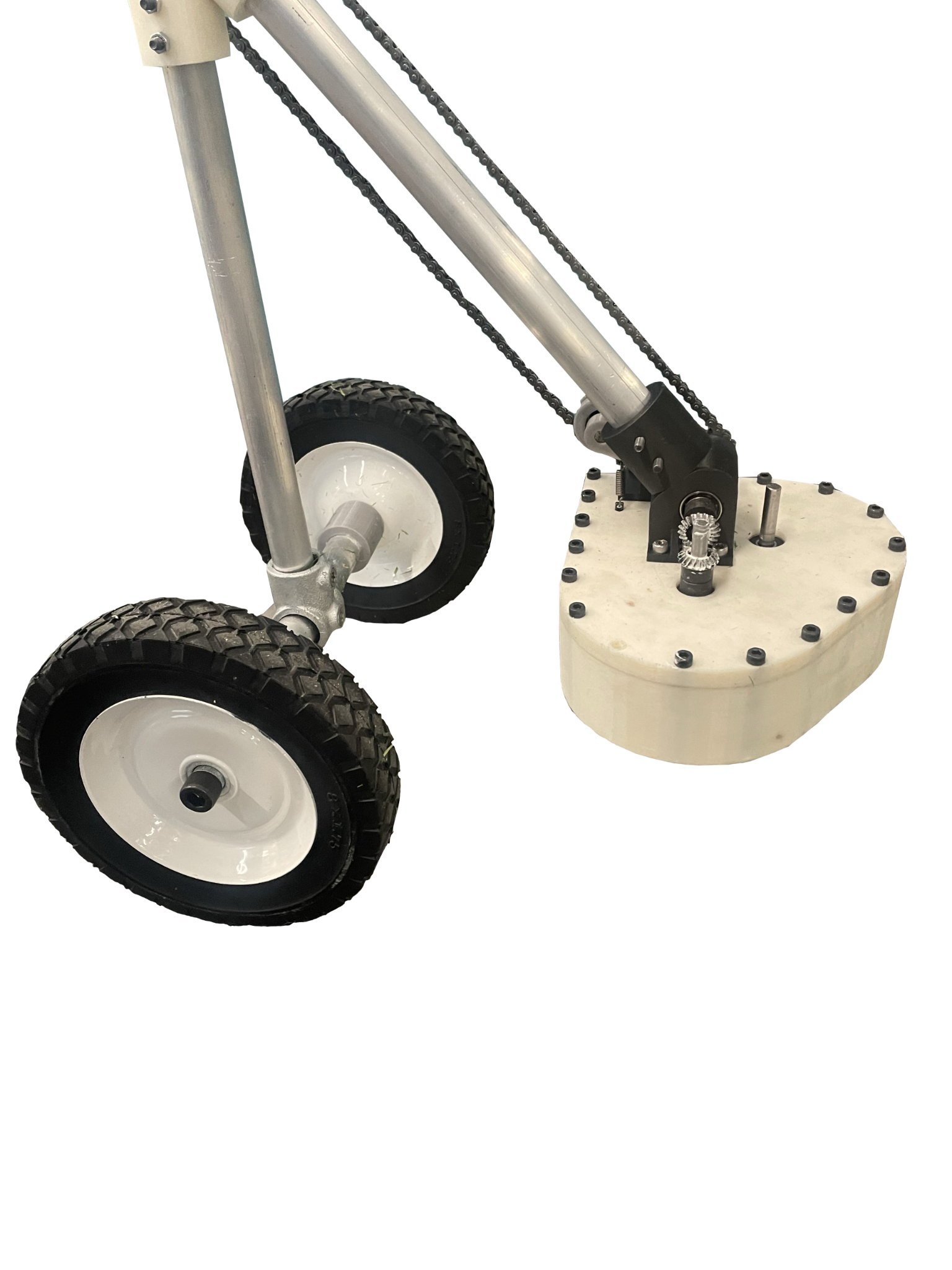
The final prototype sends hand-crank input through a roller chain along the shaft and into a three-stage spur gearbox at the cutting head. A two-wheel chassis supports the cutter, controls height and gives the operator a stable turning axis.

Starting from roughly 60 RPM at the crank, the 142:1 transmission targeted 8,000 RPM at the line. The team rejected planetary gears because they were difficult to back-drive, then selected a compact three-stage spur arrangement after comparing size and friction across multiple concepts.

EcoTrim chain drive and tensioner entering the gearbox
Roller-chain power transmission and gearbox tensioner
EcoTrim two-wheel chassis and front cutting-head enclosure
Two-wheel chassis developed for stability and consistent cut height

Gearbox development

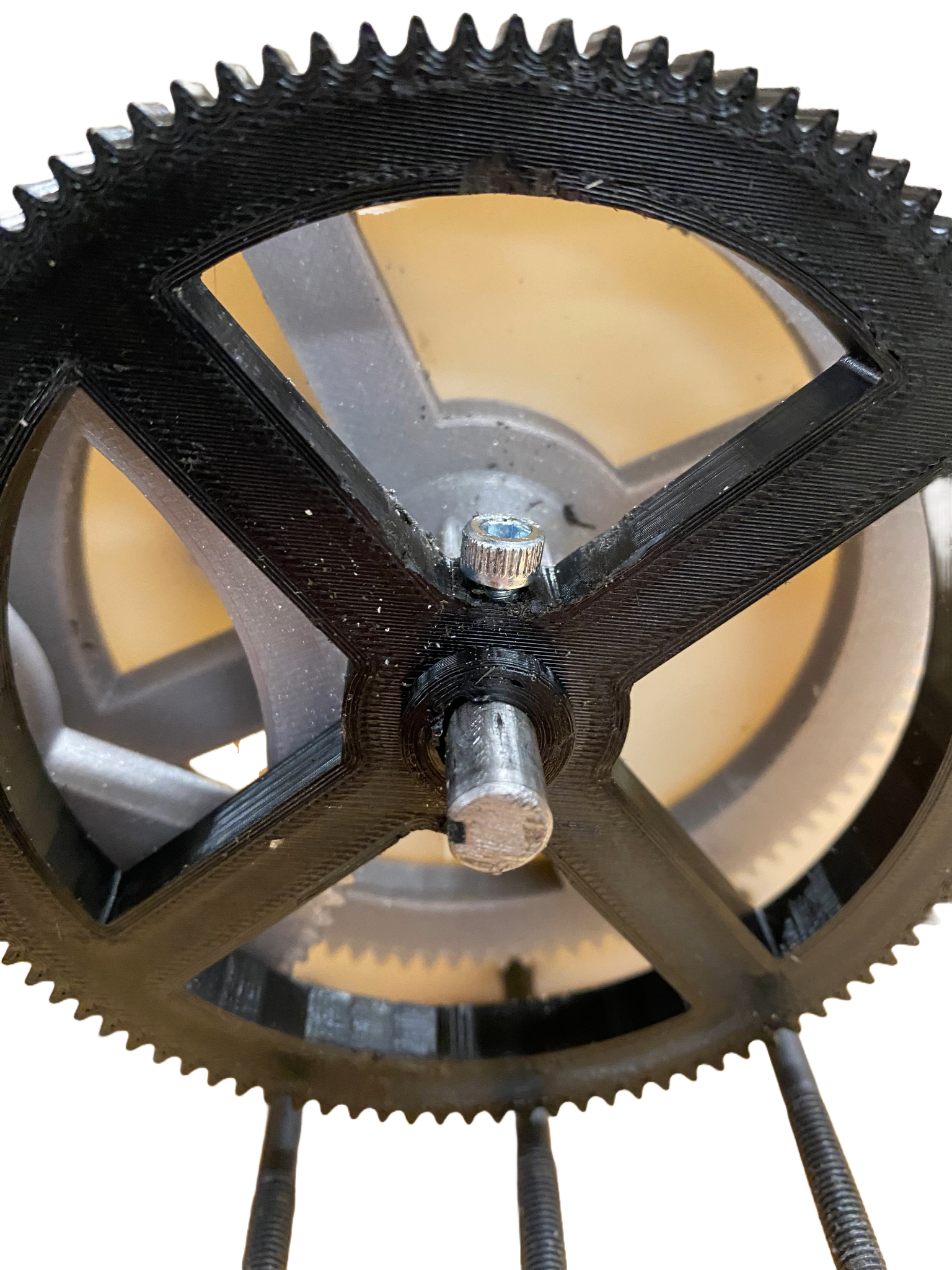
Friction dominated the speed-increasing transmission. The team compared lubricated and dry-contact models, reduced contact between gear faces, improved material selection and pinned the drive gear to its shaft after early slip and alignment problems.

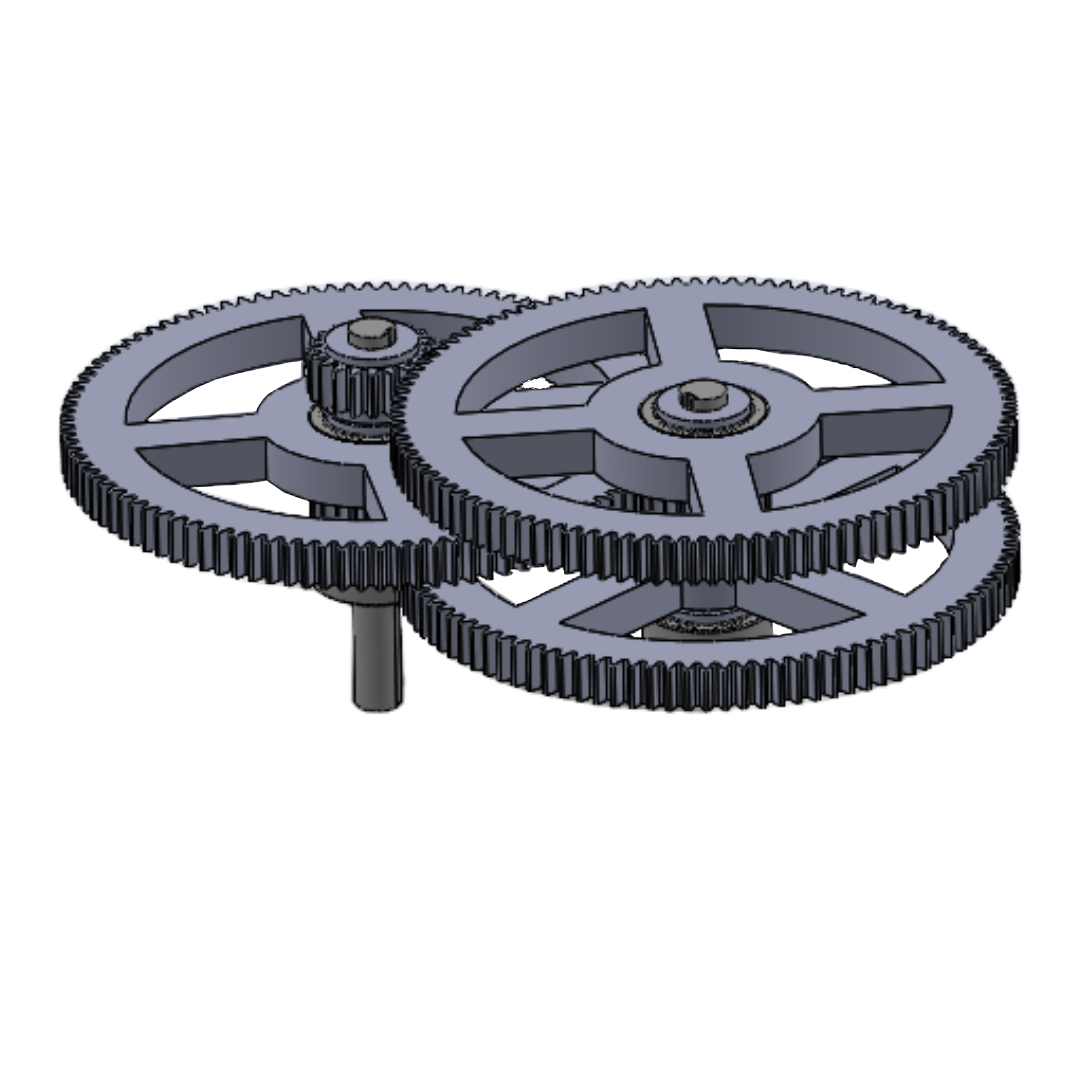
The final gearbox used custom compound gears printed in carbon-fibre-filled nylon. Each stage provided about 5.2:1 multiplication, giving the team control over the gear geometry while keeping the assembly light enough for a hand-operated tool.

CAD rendering of the three-stage EcoTrim compound spur gearbox
Three-stage compound spur-gear layout
Manufactured carbon-fibre-filled nylon EcoTrim drive gear pinned to its shaft
Printed drive gear after material and shaft-retention iterations

Aerodynamic limit

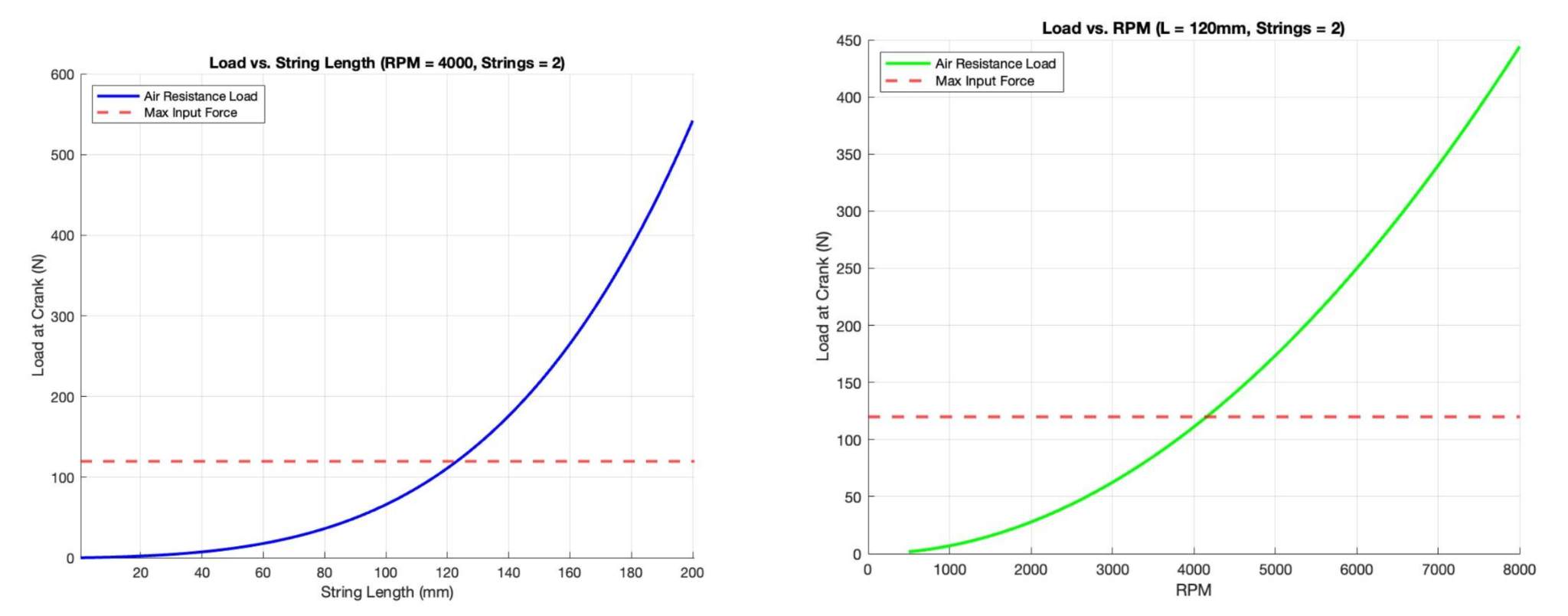
The cutting line became the dominant load at speed. The team's model showed that aerodynamic torque grows with the square of RPM and approximately the fourth power of line length, so a longer line rapidly consumes the available crank force.

At 4,000 RPM, predicted load reached the estimated input limit at roughly 120 mm of line. With a 120 mm line, the model reached the same limit a little above 4,000 RPM. Those results framed the physical tests around short and long line lengths.

EcoTrim air-resistance model showing crank load against string length and rotational speed
Predicted aerodynamic load versus line length and RPM; the dashed line marks estimated maximum input force

Testing and result

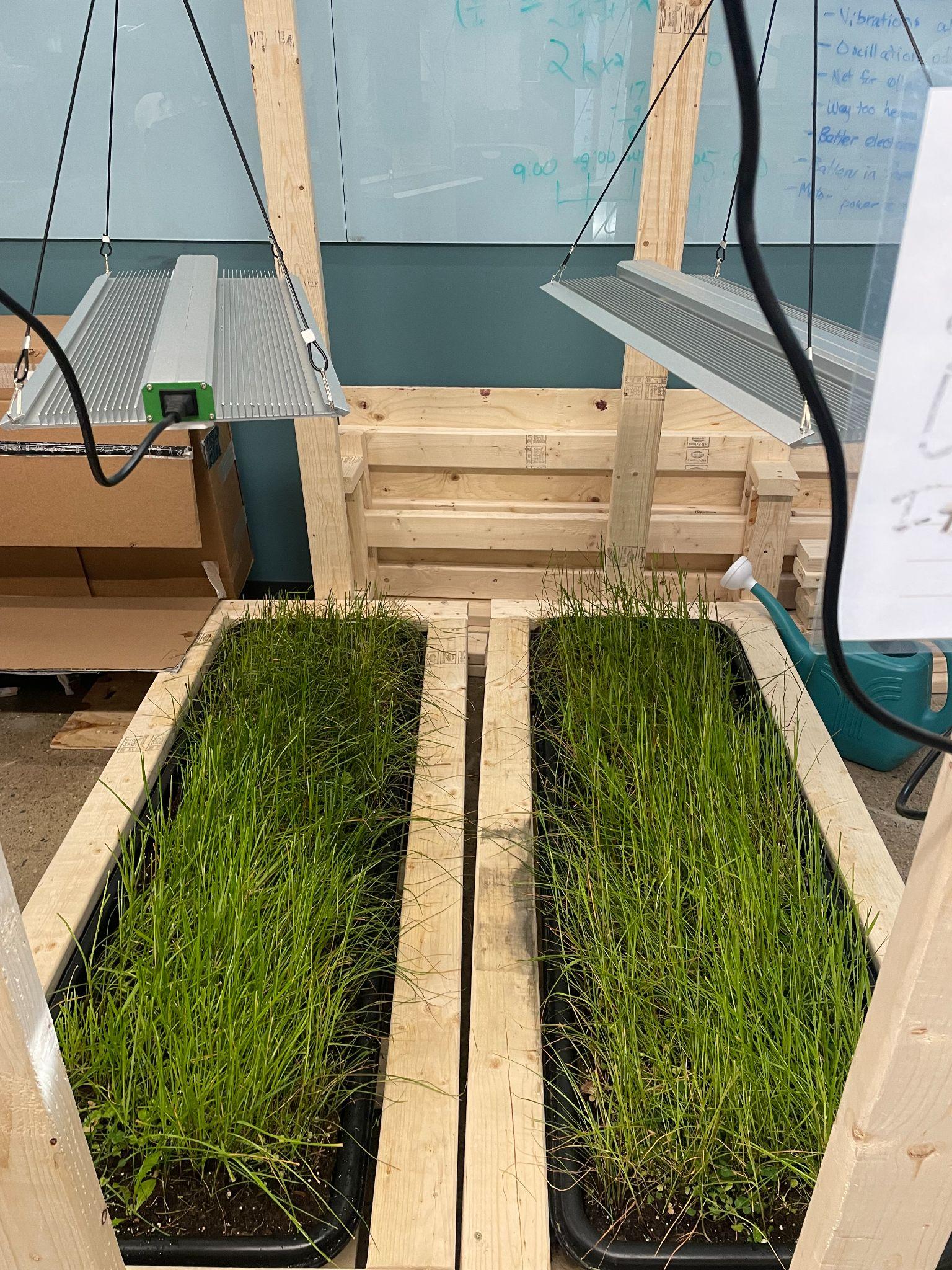
Because the project ran through a Boston winter, the team built an indoor grass test bed with support from Northeastern's Director of Horticulture. The rig enabled repeatable cutting trials before outdoor conditions were available.

The drivetrain reached approximately 11,000 RPM without a cutting head. A 60 mm line ran near 8,000 RPM and produced a clean, sharp cut; extending it to roughly 160 mm reduced speed to about 4,000 RPM and caused fraying and tangling. The measured trend confirmed that aerodynamic load, rather than gear ratio alone, set the practical limit.

Indoor grass test bed built to evaluate the EcoTrim prototype during winter
Indoor grass test bed used for repeatable cutting trials
Slow-motion grass-cutting test with the completed EcoTrim prototype

Commercial

The completed prototype was documented in a short commercial showing the tool in use. The team also prepared printable components for public release so the mechanical design could be inspected and reproduced.

EcoTrim commercial · filmed with the completed capstone prototype
Next projectWhipper trebuchet